JUST ANOTHER BRICK IN THE WALL
Hypnotism and Self-Education – A M Hutchison
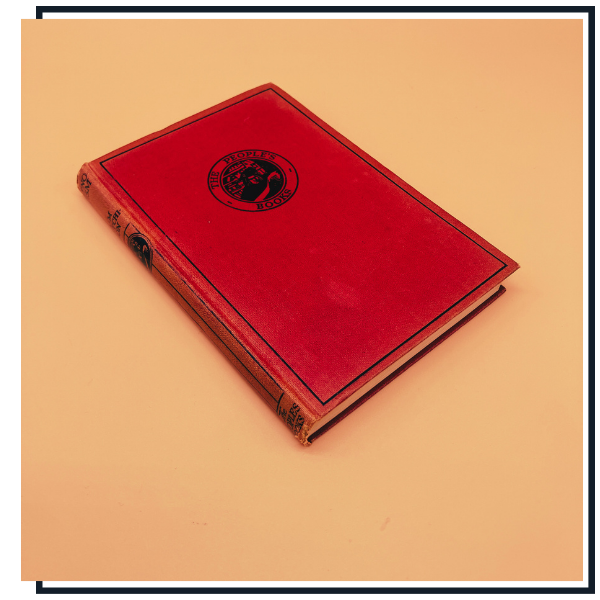
This wee book on Hypnotism and Self-Education was published in London and Edinburgh in 1919. It was written by a Dr Alice Marion Hutchison, an Edinburgh physician who sought to bring hypnotism to the lay public as part of ‘The People’s Books’ self-education series.
I’m so accustomed to hypnosis books being penned by men, I missed inklings of a female perspective in a factual, neutral, earnest ‘public informational’ work. The book begins with a quote from Charlotte Brontë’s Villette by a physician who finds himself faced by a patient in intense mental misery: “Medicine can give nobody good spirits. My art halts at the threshold of hypochondria.” The conclusion, to seek society and positivity, segues into the blurry space ‘medical’ hypnosis occupied between physical and mental health.
The book’s purpose, then, is to empower the reader to navigate the emerging field of “psycho-therapeutics (mind treatment)” using hypnotism – and common sense. The onus is on the conscientious individual to prevent depression and insanity, maintain good health and hygiene, and be open-minded, social, and productive. One can imagine that, as a female doctor working in Scotland, she may have held views on rich-poor and poor-rich ‘lady-problems’ of preventable ‘hysteria’ or ‘neuroticism’, concluding that the public required basic health and psychological education no matter the prudish sensibilities of the time. Drugs and the ever-controversial field of psychiatry were otherwise not magically solving human woes; but neither were doctors an appropriate shoulder to cry on because *polite doctor cough* lobotomy is always an option, madam..?
Hutchison’s chapter on the history of hypnotism is worth reading for her take on Franz Anton Mesmer and the rise and role of Mesmerism. I never read an account of Mesmerism where the fad is so central to the French Revolution and the spread of revolution through Europe, America, and beyond. The ‘precursor’ to hypnotism was a runaway train of White Male Woo-Woo; but, thanks to figures like James Braid and John Elliotson, it was a medical fact and fancy that physicians like Hutchison used in practice and had leading opinions on.
With this in mind, the book addresses the “dangers” of public use of hypnosis early on. A dentist’s use of hypnotism to fascinate a child with a shiny disk, so the child cooperates with an oral hygiene check-up, may have been the sort of thing she imagined required policy and policing. The possibility of hypnotism being used for crime or to “enslave” people is raised, plus entertainment stage hypnosis and, by inference, doctor-esque showman personas, are further bothers. To reduce risk to the public, she believes “it is the duty of the State to limit the use of hypnotism (as it has already limited the use of chloroform), so making its employment for public entertainments illegal and limiting its use to purpose of re-education by those duly qualified to exercise it.”
Chloroform! Just as potent as a stage hypnosis show, apparently! I was supposed to be a German-speaking lawyer back in 1997, but I chose, instead, to study film, TV, theatre and literature at uni, much to my Father’s lament, and the notion of FINALLY enforcing the 1952 British Hypnotism Act and shooing stage hypnotists off the boards seems rather pointless in these desperate days of influencer culture. Do we all report to the “Television Psychiatrist” in charge of this non-consensual, AI-enhanced, 24/7 SoMe comedy porno called Reality to collect our daily dose of croton-oil and gruel in exchange for RikTok coupons and Chatr feels?! Only Tech Bro billionaires know what this grotty future holds…
The book contains a handy summary of hypnosis theories and figures. I hadn’t come across Rudolf Heidenhain (1834-1897) before. He had a physiological theory of hypnotism that must have spoken to Hutchison, because she admits he is not much mentioned in passing at time of writing. Being a doctor, it is relatable that she is drawn to physiological explanations of hypnotism – but the book, as is mostly still the case, doesn’t find one. As with most works of this era, the use of hypnotism to ‘cure’/treat medical conditions is evidenced by simple case studies: a woman with indigestion is ‘hypnotised’ to realise that her propensity for worry is the real cause of her problems; a man with a drinking habit is ‘hypnotised’ to acknowledge his depression and sober up; an insomniac is ‘hypnotised’ to a healthy sleep schedule, etc.
For me, ‘hypnotism’ seems not much more than a euphemism for filling gaps in parenting and healthier psychological development. Hutchison represents a neat, stoic, authoritative ritual of hypnotism: a fast and conclusive close of awkward personal matters. Hypnotism is to solve problems, not ceaselessly explore and exacerbate symptoms. But, in this modern world, where it is normalised to ‘freeflow’ text-talk into social media and tech tools in a never-ending-story of user-as-product self-inspection and latent monetisation, this ‘unconscious mind’ model – of the unsaid and unspeakable, of the untapped and well suppressed – is surely falling apart? “Psycho-analysis drags into the light of day the soiled clothes of the subconscious mind,” she writes. “Sometimes, of course, the soiled linen becomes so dirty that it calls aloud to be brought out and washed. But in the majority of cases, as a clever writer has put it, the advice of the frog doorkeeper to Alice in Wonderland is quite sound enough: “You let it alone and it’ll let you alone!”.”
Is it better ‘out’ or ‘in’ is a curious tension in hypnotism, I think. There’s A LOT more money, fame, and glory in the former! So that significantly shapes ‘hypnotism’ as it exists today.
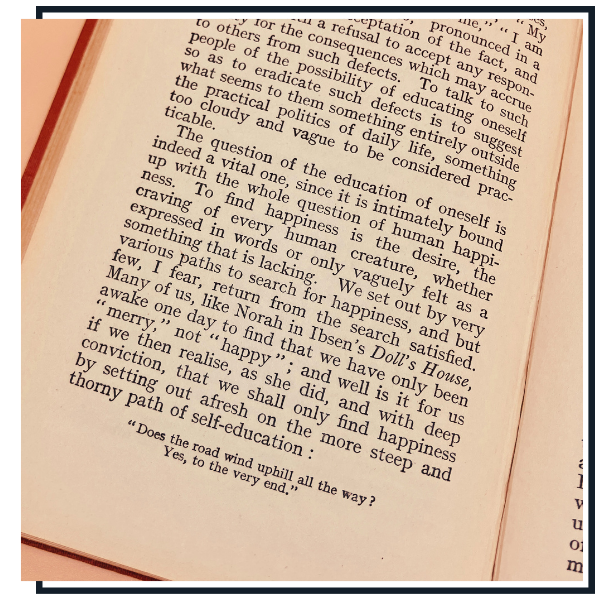
Is it better to be merry or happy is a key question for Hutchison as she nears the end of the book. That’s when it dawned on me that the writer was a woman. She writes movingly of the potential and promise of hypnotism solving people’s psychological scars and shortcomings in order for a new future to unfold.
But where’s the money in that?!