
PEOPLE IN GREY
The Woman in White – Wilkie Collins
Well, I mentioned in my previous post that I was an unprofessional professional and here is the proof that there is always some unfinished business buzzing about my brain before the year’s end that I must finish up!
I’ve been wanting to write about the author Wilkie Collins and his book The Woman in White all year, and his book is stacked on top of Alison Winter’s book on my desk in order to properly understand it. Time to get ‘em off said desk and get on with 2024!

So! At the turn of the century, three authors – who were also all amateur Mesmerists – caused the original definition of ‘a sensation’. And they were: Charles Dickens, George du Maurier, and Wilkie Collins.
Collins’s book caused a sensation because it excited (in the full and true sense of the word) people’s senses and was a ‘deliberate’ experiment in doing so. And it really is worth investing in Winter’s book to glimpse the very powerful effect it had on people at that period in history. Because it was a historic inflection point; life was a cosmic soup of possibility – but yet it was a ‘soup’ that people did not unite on to co-create and make consensus reality. And so it became, IMHO, a transitional period when people believed they had ‘train spine’ and ran from moving pictures because technology outpaced human understanding – all whilst the horrors of colonial rule and crumbling power structures persisted. And so ‘wonder’ and ‘magic’ became the buzz words for anyone who couldn’t (or wouldn’t) keep pace with science and progress.
And I suppose the uniting factor between Collins and this blog is that hypnosis really simply does not exist – it is a mental construct and a consequence of effective storytelling. And hypnosis is mostly just suggestion, but suggestion is very powerful.
And my job is to just excite you.
[And when I told Kev about this post he added: “And my job is to disappoint you!”]
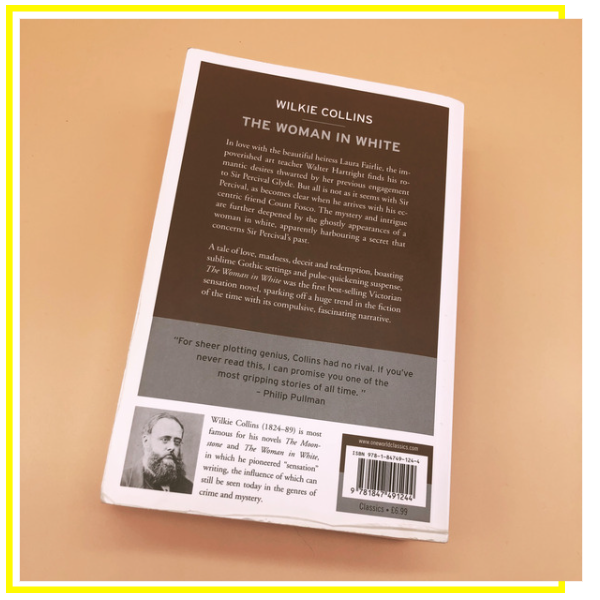
Diving deeper into The Woman in White, Collins masterfully weaves a tale of mystery, identity, and deception set against the backdrop of Victorian England. The story follows Walter Hartright, who encounters a ghostly woman in white on a moonlit road, unraveling a web of secrets involving wrongful imprisonment, inheritance schemes, and the blurred lines between sanity and madness. What makes this novel a cornerstone of gothic literature is its intricate plotting and vivid characterisations, where every twist heightens the reader’s sense of unease and anticipation, much like the era’s fascination with the unknown realms of the mind.
The themes of mesmerism and suggestion permeate the narrative, reflecting Collins’s own interest in these practices. Characters manipulate perceptions and realities through subtle psychological influences, echoing how hypnosis relies on the power of the imagination to alter consciousness. For enthusiasts of hypnotism, the book serves as a literary exploration of how suggestion can distort truth and control behaviour, drawing parallels to real historical experiments in mesmerism that captivated the public imagination during the 19th century.
As we wrap up the year, revisiting classics like this reminds us of the enduring allure of gothic tales that probe the depths of human psychology. Whether you're drawn to the hypnotic pull of suggestion or the shadowy intrigue of Victorian mysteries, The Woman in White offers a timeless invitation to question what we see and believe. Here's to more enchanting reads in the year ahead – may they inspire wonder and spark your own creative explorations.
